
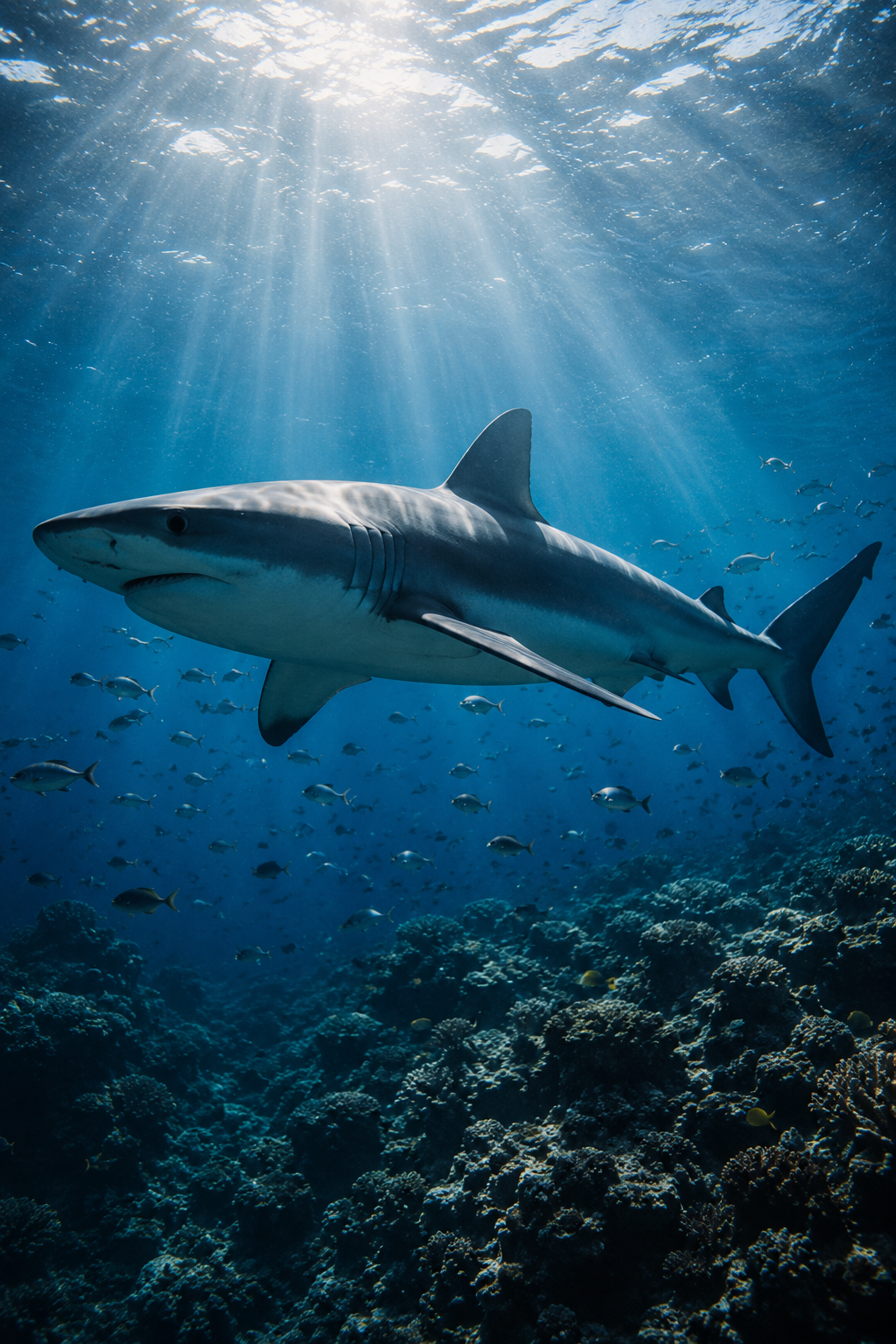
Why Sharks Are Essential to Healthy Oceans
Sharks have patrolled Earth's oceans for more than 450 million years, surviving multiple mass extinctions and evolving into some of the ocean's most successful predators. While they are often portrayed as dangerous, sharks play a vital role in maintaining healthy marine ecosystems.
Sharks Keep Marine Ecosystems in Balance
Many shark species are apex predators, meaning they sit at the top of the food chain. By naturally regulating populations of fish, rays, and other marine animals, sharks help prevent any one species from becoming too abundant.
This balance supports healthy coral reefs, thriving seagrass beds, and diverse fish populations that countless other marine animals depend upon.
Healthy Sharks Support Healthy Fisheries
Although it may seem surprising, healthy shark populations can benefit commercial and recreational fisheries. By removing weak, sick, or injured prey, sharks contribute to healthier fish populations over time.
When shark populations decline dramatically, the effects can ripple through the food web, sometimes leading to ecosystem imbalances that are difficult to reverse.
Sharks Face Growing Threats
Despite their ecological importance, many shark species are declining worldwide due to human activities.
Some of the biggest threats include:
Overfishing
Bycatch in commercial fisheries
Habitat degradation
Climate change
Illegal shark fin trade
Many shark species reproduce slowly, making it difficult for populations to recover once they have been depleted.
Conservation Is Working
There is reason for optimism.
Around the world, scientists, conservation organizations, governments, and local communities are working together to protect sharks through:
Marine protected areas
Science-based fisheries management
Improved bycatch reduction technologies
Public education
International conservation agreements
These efforts are already helping several shark populations stabilize or recover.
What You Can Do
Every person can play a role in shark conservation.
You can:
Learn about different shark species.
Support sustainable seafood choices.
Visit accredited aquariums and conservation organizations.
Share science-based information about sharks.
Help replace fear with understanding.
Even small actions help build public support for protecting these remarkable animals.
Continue Your Shark Journey
If you're passionate about sharks and marine conservation, explore the Sharks & Humanity collection, including:
Shark Behavior, Intelligence & the Hidden Mind
Shark Conservation Handbook
Shark Species of the World
Shark Tourism, Safety & Human Interaction
Together, we can promote a greater understanding of sharks and the critical role they play in keeping our oceans healthy.
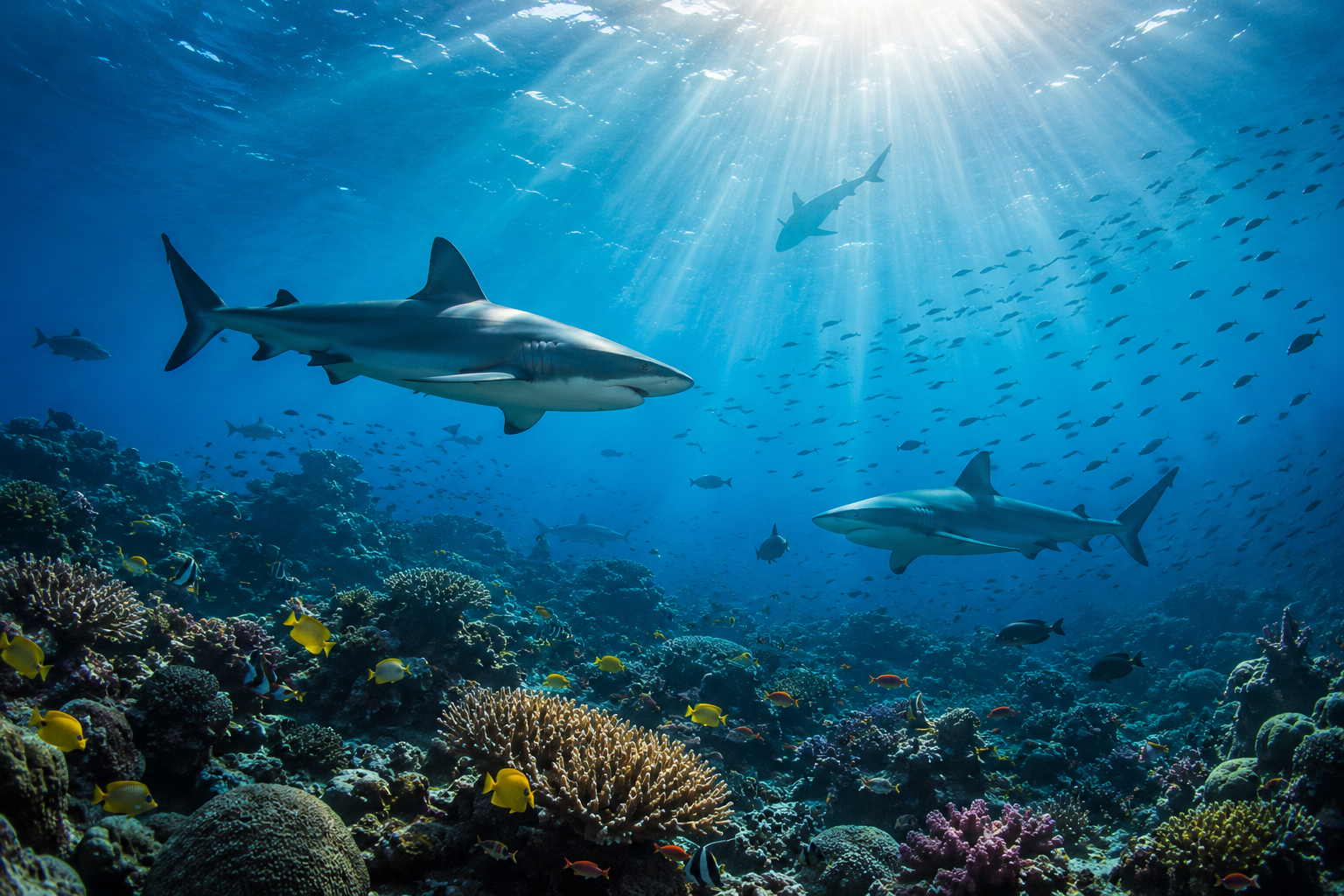
Why Sharks Matter: The Ocean's Most Misunderstood Predators
Category: Shark Science
Estimated Reading Time: 6 minutes
For more than 450 million years, sharks have patrolled the world's oceans. They appeared long before dinosaurs walked the Earth and survived multiple mass extinctions that reshaped life on our planet.
Yet despite their incredible evolutionary success, sharks are among the most misunderstood animals on Earth.
Popular culture often portrays sharks as dangerous predators, but the reality is far more fascinating. These remarkable animals play an essential role in maintaining healthy oceans, supporting biodiversity, and keeping marine ecosystems in balance.
Understanding sharks isn't just about appreciating an incredible group of animals—it's about protecting the future of our oceans.
Ancient Survivors
Sharks are among the oldest vertebrate animals still living today. Over millions of years, they evolved extraordinary adaptations that allowed them to thrive in nearly every marine environment.
Today, scientists recognize more than 500 species of sharks, ranging from the tiny dwarf lanternshark, which can fit in the palm of your hand, to the gentle whale shark, the largest fish on Earth.
Every species fills a unique ecological role.
Some hunt near coral reefs.
Others patrol the deep ocean.
Some even travel thousands of miles across entire ocean basins.
Together, they form one of the ocean's most important groups of animals.
Why Sharks Matter
Healthy shark populations help maintain healthy ecosystems.
Many sharks serve as apex predators, helping regulate populations of fish and other marine animals. By preventing any one species from becoming overly abundant, sharks contribute to balanced food webs that support coral reefs, seagrass meadows, and countless other forms of marine life.
Even species that don't occupy the very top of the food chain play vital roles within their environments.
Without sharks, marine ecosystems can become unstable, affecting everything from commercial fisheries to coral reef health.
Facing Modern Challenges
Despite surviving for hundreds of millions of years, sharks now face threats unlike anything in their evolutionary history.
Many populations have declined because of:
Overfishing
Bycatch
Habitat degradation
Pollution
Climate change
Illegal wildlife trade
Because many shark species grow slowly, mature later in life, and produce relatively few offspring, recovery can take decades.
That makes conservation efforts especially important.
Replacing Fear with Understanding
One of the greatest challenges facing shark conservation isn't biology—it's perception.
Movies, myths, and sensational headlines have shaped public opinion for decades, often creating fear that doesn't reflect reality.
Education has the power to change that.
When people learn how sharks behave, why they matter, and the challenges they face, they often replace fear with curiosity and respect.
Every conversation, classroom lesson, book, and shared story helps build a more informed understanding of these extraordinary animals.
The Mission of Sharks & Humanity
At Sharks & Humanity, we believe that knowledge inspires conservation.
Through research-based books, educational resources, and stories from the world beneath the waves, our mission is to make shark science accessible to readers of all ages.
Whether you're just beginning your journey into marine biology or have spent years exploring the ocean, we hope this journal becomes a place where curiosity grows into understanding—and understanding grows into action.
Continue Exploring
If you'd like to learn more about shark biology, conservation, and the remarkable diversity of these animals, explore our collection of books, including the Shark Conservation Field Guide and Shark Species of the World.
Together, we can create a future where sharks and humanity thrive.